


Event Date


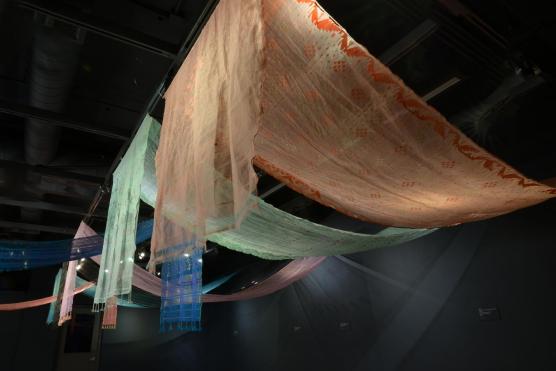

“Woven Air: Dhakai Jamdani Textile From Bangladesh,” is an exhibition of traditional Bangladeshi textiles noted for a weaving technique that creates surface decorations.
This exhibition features fine-count Jamdani, the ornate textile that has experienced a revival in Bangladesh. Jamdani artisans employ the same weaving techniques of two different thread densities, with the denser wrap thread inlaid with the fine warp thread to create tactile motifs and designs that are primarily flowers.
In addition to items from exhibition curator Hafsa Akter’s own collection, some pieces have been acquired by Akter from contemporary artisans for this installation and include a mix of fabric as well as saris and other clothing items. After the exhibition, she will donate some pieces to the Jo Ann C. Stabb Design Collection at UC Davis, which supports and enhances the teaching and research goals of the Department of Design and its curriculum.
Jamdani was produced for centuries in South Rupshi of Narayanganj district in Bangladesh. Under British colonialism, the Jamdani and muslin industries rapidly declined due to colonial import policies favoring industrially manufactured textiles.
“Bangladeshi artisans and craftsmen can weave the finest quality hand-weaving textile,” said Akter, a UC Davis graduate student in design and native of Bangladesh. “With this exhibition, I wanted to showcase my culture and its rich background correlated with textile making.”